- interactive game
- museum
- commission
CLIENT
SL Bhatia Museum of Medical History
DELIVERY
- concept
- design delivery
- production
- project management
COLLABORATORS
- Radha A
A pixel-art chronicle of the social, spatial, and medical history of Typhoid in Bengaluru
PROJECT DETAILS
|
CLIENT
SL Bhatia Museum of Medical History
DELIVERY
COLLABORATORS
How does a microscopic bacterium reshape a metropolis? The research team of SL Bhatia Museum of Medical History uncovered a narrative of Typhoid that extended far beyond the clinic. It was a story etched into Bengaluru’s urban planning, its colonial segregations, and its social stigmas. The challenge was to translate centuries of complex medical data and urban evolution into a medium that felt urgent and accessible. Our intention was to move away from the "static gallery" and instead build a spatial history—a virtual world where the invisible trail of a fever could be traced across the changing map of a city.
From the Microscopic to the Metropolitan The journey begins inside a virtual Petri dish. This scale-shift sets the tone for the experience, symbolizing the pervasive nature of the Salmonella typhi bacteria. From this microscopic starting point, visitors are released into an expansive 8-bit recreation of Bangalore, navigating a world where history is experienced through movement.
Through Time and Space Guided by NPCs (Non-Player Characters) and interactive artifacts, visitors traverse three distinct eras: the pre-colonial landscapes of Bengaluru, the rigid structures of the Colonial city, and the sprawling complexity of the modern metropolis. By utilizing the Gather Town platform, we transformed the exhibition into a collaborative social space, allowing museum mediators to lead live, guided tours through the pixelated streets.
The Aesthetic of Contrast The soul of the project lies in its visual tension. We juxtaposed a playful 8-bit environment with hand-drawn sketches of Bangalore’s historical landmarks, creating a unique and immersive texture for the exhibition. By gamifying the curriculum of medical history, Jwara invites the audience to play, explore, and ultimately understand how an epidemic can become the hidden architect of a city.
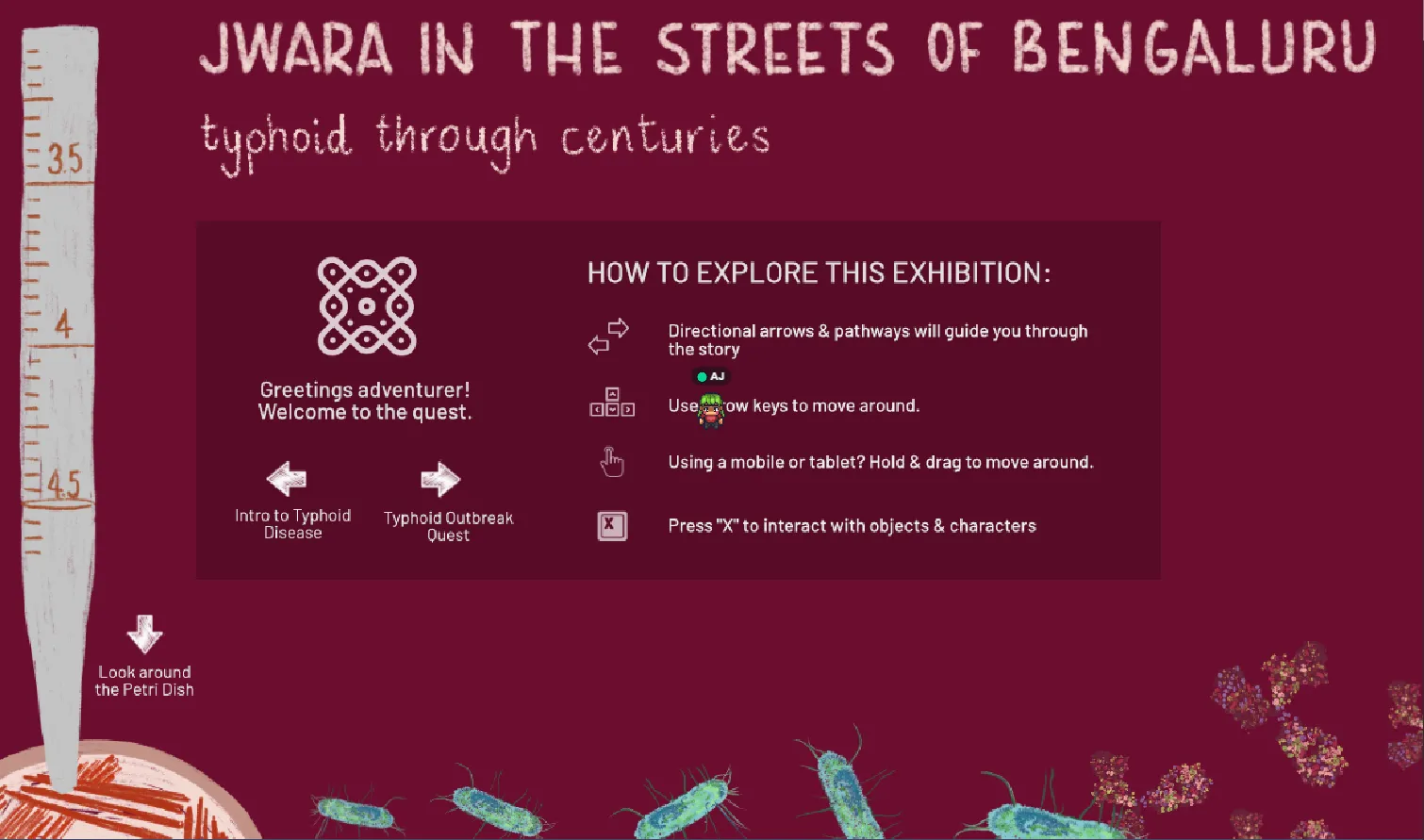
image 1
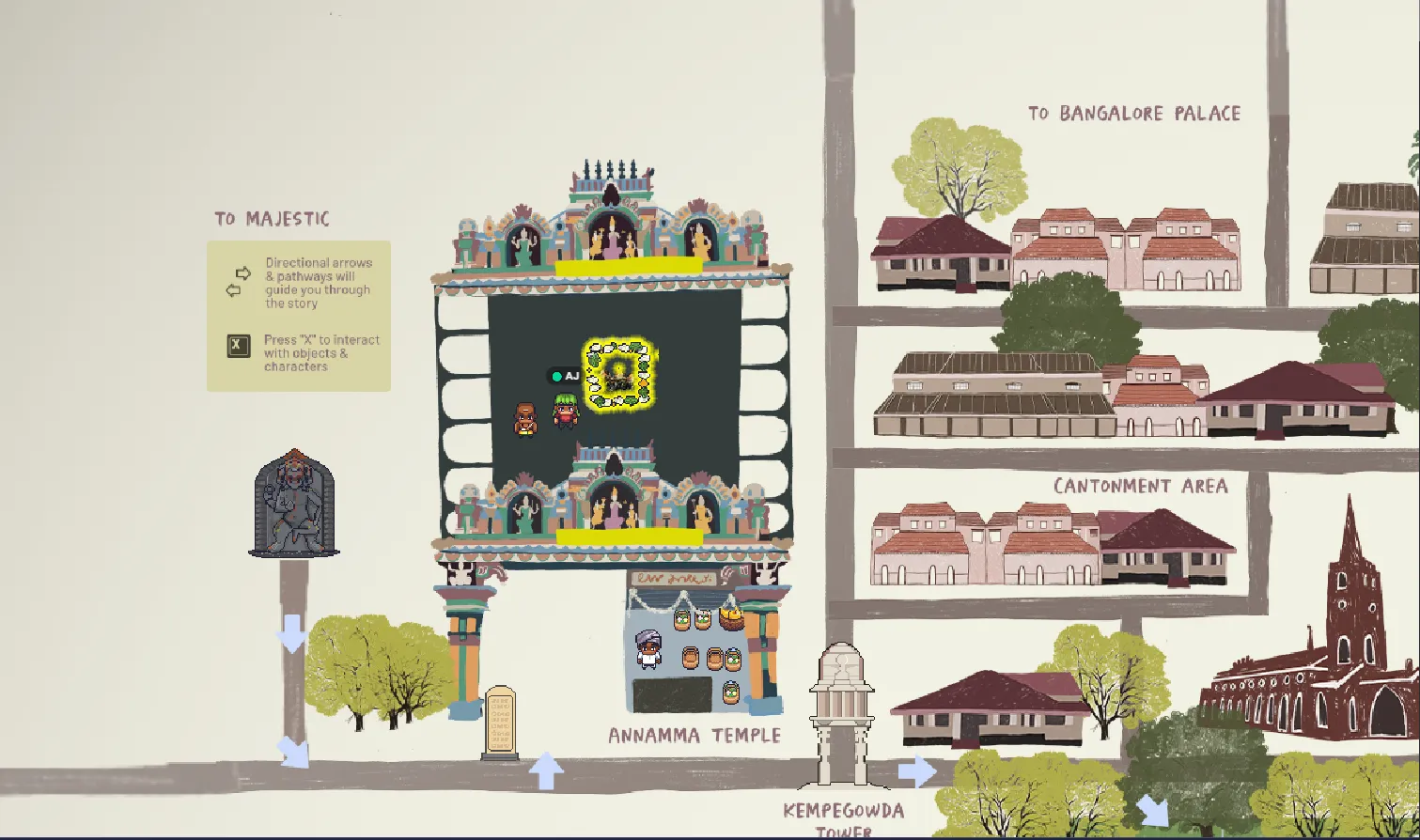
image 2
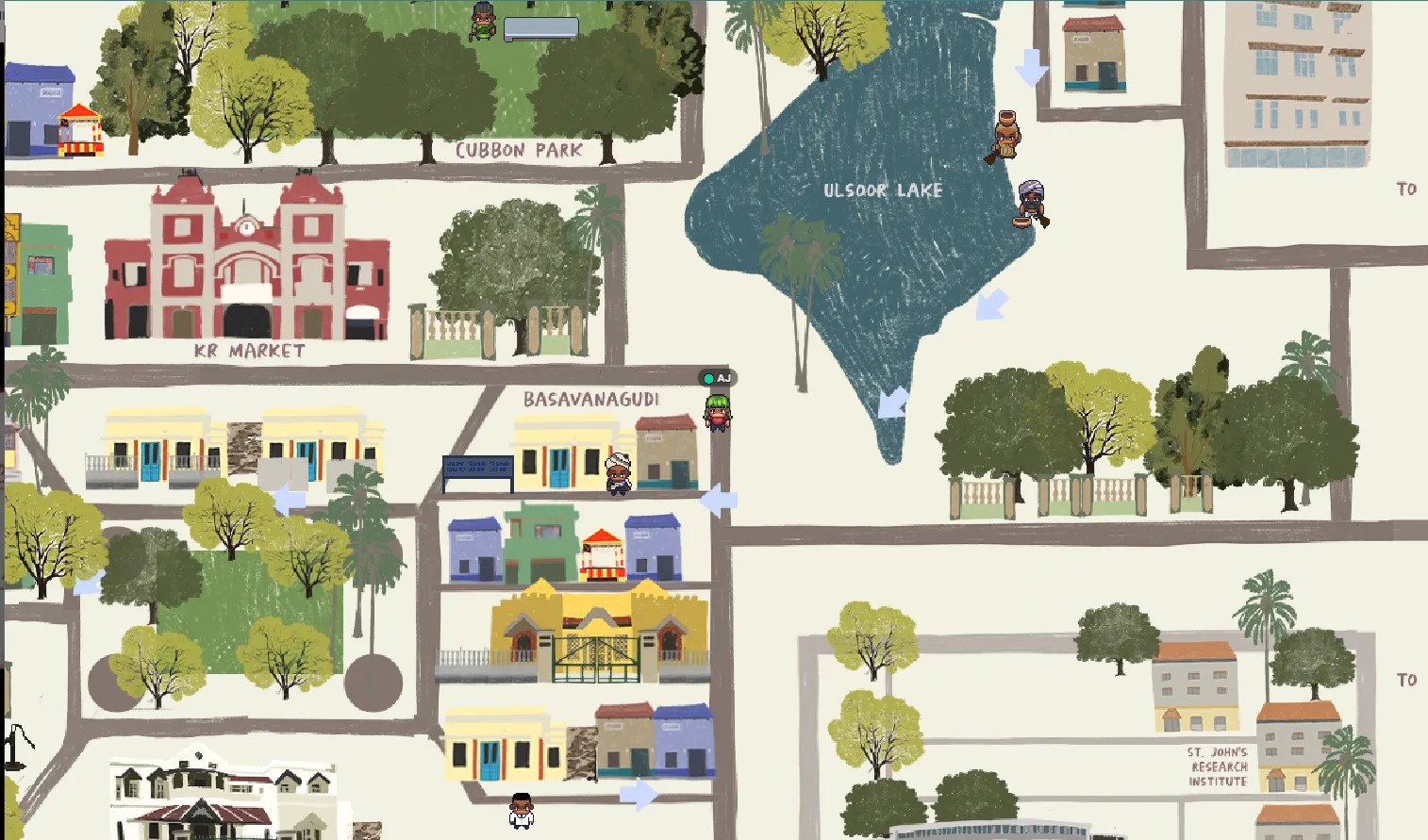
image 3
test videos 2
